Agave – silent guardians of Medvidina bay
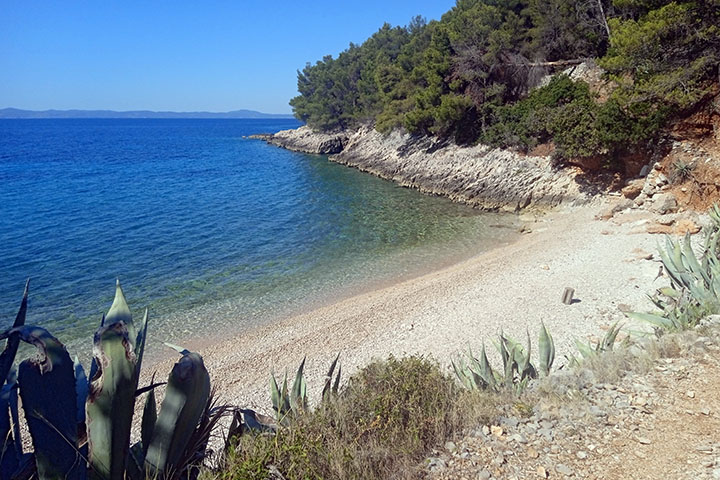
When you arrive in Medvidina bay on the south side of Hvar, one of the first plants that catches your eye are the agaves – those sculptural, blue‑green rosettes growing from the rocks above the sea. They look like they have always been here, quietly watching the waves, wind and sun in this hidden corner below the village of Gdinj.
Agaves are perfectly adapted to this dry, stony landscape: they store water in their thick leaves, withstand summer heat, and need almost no soil to survive. That makes them a natural part of the wild Mediterranean scenery that surrounds Incredible Paradise Camping and our small cove.
A plant that flowers only once
The most fascinating thing about agaves is their life strategy: most agave species are what botanists call “monocarpic”, which means they flower only once in their lifetime – and then die. For 10–20 years (sometimes even longer) the plant just sits and grows slowly, building up energy in its rosette of leaves.
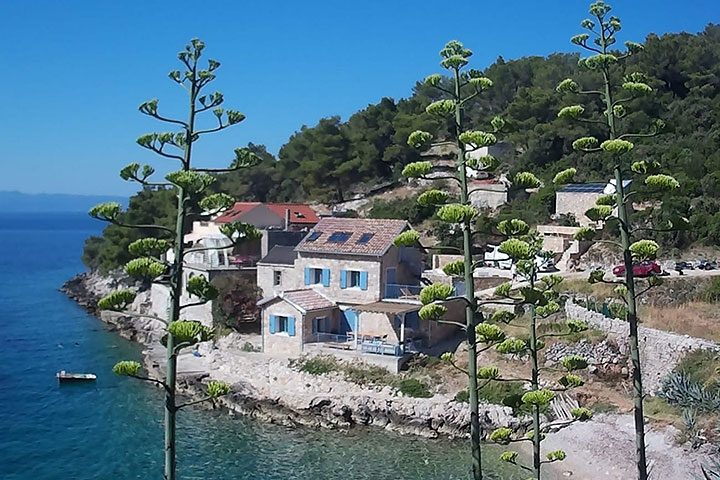
Then, suddenly, one season it decides that the time has come. From the centre of the plant a thick flowering stalk starts to rise, sometimes growing several centimetres per day, until it becomes a tall “agave tree” covered with hundreds of small flowers.
The “death bloom” – a spectacular farewell
This last act of the agave is often called a “death bloom”: the plant pours all its stored energy into one huge flowering stalk, produces nectar for insects and seeds for the next generation – and after that the mother plant slowly dries out and collapses. It is a spectacular and rare moment; most visitors will only see a few agaves in full bloom in their lifetime, because each individual plant does it just once.
If you are staying in Medvidina bay at the right time, you may notice such a stalk rising above the other agaves along the path or above the stone terraces. First the leaves in the centre change shape, then the stem pushes up, and over the next weeks it becomes a natural “tower” with greenish‑yellow flowers buzzing with bees and other pollinators.
The circle of life: pups and new agaves
Even though the mother plant dies after flowering, the story does not end there. Agaves usually leave behind “pups” – small copies of the plant that grow around the base, or even tiny plantlets (bulbils) on the old flower stalk, which can take root and continue the line.
In this way one agave can create an entire family over the years, slowly spreading along dry stone walls and rocky slopes above the bay. When you walk around Incredible Paradise Camping and see groups of agaves at different sizes, you are probably looking at several generations of the same plant family.
Agaves and the spirit of Medvidina
For us, these plants are more than just “decoration”. They represent patience, endurance and a different sense of time – quietly growing for many years, then making one grand, generous gesture before disappearing and giving space to their children.
Sitting under the pines, listening to the cicadas and watching the sea, you may notice an agave stalk on the horizon and remember that some beings live their whole life for one single bloom. In Medvidina bay, among the rocks and the sound of the waves, this simple plant tells a big story about the circle of life.